
When Is PESR Steel Worth Buying? A Grade-by-Grade Guide for 1.4542, 1.2344 and Mould Steel

PESR steel is worth buying when its controlled-pressure remelting route addresses a defined requirement, such as elevated nitrogen content, high cleanliness, improved homogeneity or critical fatigue reliability. It should not be added automatically to every steel order. The grade, application, heat-treatment condition, inspection standard and traceable melting-route documentation must all support the decision.
Two days ago, we explains how the Pressure Electroslag Remelting Process works and how it differs from ESR and VAR. This article moves from furnace technology to the decision that matters at the purchasing desk: Does this specific bar, plate or tool really need PESR?
A typical specialty-steel stock list may contain 1.2085, 1.2344 flat bar, 1.2344 round bar, 1.2367, 1.2379 flat bar, 1.2379 round bar, 1.2738, 1.4542, 9Cr18MoV, 17-4PH round bar, 42CrMo4, 4340, EN24, C50 and S355J2+N.
The grades do not all belong in the same metallurgical category. They also do not all justify the same melting route.
Grade Name and Melting Route Are Two Different Specifications
A grade designation primarily defines an alloy family and its applicable chemistry or performance requirements. PESR describes how a consumable electrode was remelted.
This distinction prevents one of the most common purchasing mistakes:
• 1.4542 identifies a precipitation-hardening stainless steel family.
• 1.2344 identifies a hot-work tool steel family.
• 1.2379 identifies a cold-work tool steel family.
• PESR identifies a pressure-controlled remelting route.
A material can meet a recognised grade without being PESR. Conversely, when a producer offers a PESR version, the grade name alone does not prove that the delivered batch followed that route.
The steelmaker’s traceable documentation must connect the heat number and product to the stated manufacturing process.
A Fast Buyer’s Test: Is PESR Likely to Add Value?
PESR becomes a realistic candidate when several of the following conditions are present:
• the alloy was specifically designed for elevated nitrogen;
• the application requires very high cleanliness;
• non-metallic inclusions present a meaningful fatigue or polishing risk;
• compositional homogeneity is critical across a large section;
• the end-user specification names PESR;
• the producer offers a qualified PESR version of the selected grade;
• the improvement can be verified through inspection or component performance;
• the customer accepts the corresponding cost, quantity and lead time.
It is less likely to add value when:
• the component has standard mechanical requirements;
• conventional or ESR material already meets the specification;
• the supplier cannot document the remelting route;
• the main failure is caused by incorrect heat treatment or tool design;
• the order uses “PESR quality” without measurable acceptance criteria.
1.4542 / 17-4PH Round Bar: When Does Remelting Matter?
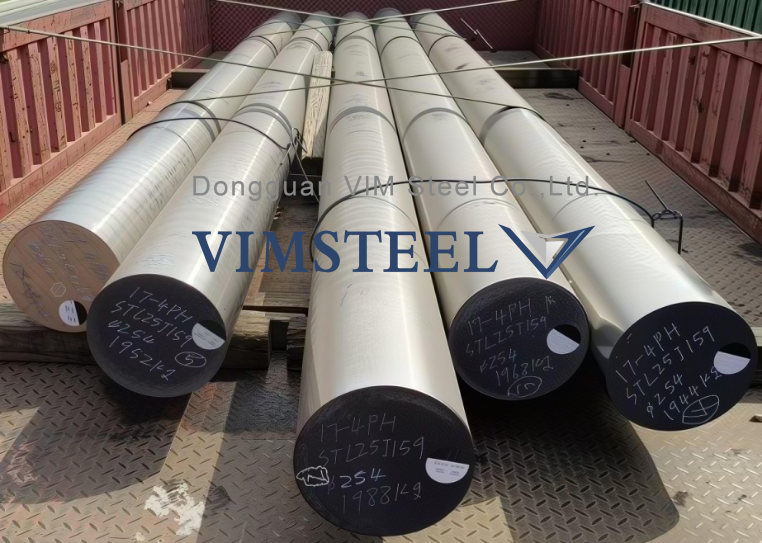
1.4542, UNS S17400 and 17-4PH refer to the same precipitation-hardening stainless steel family. It is commonly selected when a component needs high strength together with useful corrosion resistance.
voestalpine identifies ESR, PESR and VAR as available remelting approaches for improving the purity and homogeneity of its 1.4542 / 17-4PH material family.
That statement does not mean every 17-4PH round bar is PESR.
Commercial 17-4PH may be supplied through:
• conventional melting;
• ESR;
• PESR;
• VAR;
• another route qualified to the governing specification.
For general shafts and ordinary machine parts, correctly specified conventional material may be sufficient. Remelted material becomes more relevant when the component has high-cycle loading, strict internal-quality requirements or a critical aerospace, energy or precision-engineering application.
What a 1.4542 distributor should confirm
Before quoting remelted 1.4542 or 17-4PH, confirm:
• the governing material specification;
• the required melting or remelting route;
• Condition A or the required aged condition;
• required hardness and tensile properties;
• ultrasonic testing level;
• cleanliness or inclusion requirements;
• heat-number traceability;
• whether third-party inspection is required.
Condition A, H900, H1025, H1075 and H1150 are not interchangeable descriptions. A PESR label cannot replace the customer’s required delivery or ageing condition.
1.2085 Corrosion-Resistant Mould Steel
1.2085 is a prehardened, corrosion-resistant martensitic plastic mould steel known for practical machinability.
It should not automatically be sold as PESR.
A mould maker asking for premium polishability, exceptional cleanliness or a specialised high-nitrogen mould steel may need a proprietary remelted product designed for that performance level. voestalpine describes a class of high-nitrogen, hardenable, corrosion-resistant mould steels in which PESR is commonly used to obtain the required alloy condition and homogeneity.
The practical purchasing question is not “Can PESR be written after 1.2085?” It is:
Does the steelmaker offer a documented PESR grade whose actual performance matches the mould requirement?
If the answer is no, adding PESR to a standard 1.2085 enquiry may create confusion without improving the finished mould.
1.2344 Flat Bar and Round Bar for Aluminium Extrusion
1.2344 / H13 is a hot-work tool steel widely associated with aluminium extrusion, forging and die-casting tooling.
Premium 1.2344 is commonly available in ESR-remelted form to improve cleanliness, homogeneity and toughness. voestalpine describes its remelted 1.2344 product as ESR-produced rather than automatically PESR-produced.
For an aluminium extrusion plant, ESR is often the more familiar premium route. PESR should be requested only when a qualified producer route or end-user specification supports it.
Before buying 1.2344, ask:
• Is the material conventional, ESR or another documented remelted version?
• What ultrasonic quality class is required?
• Is transverse toughness specified?
• What bar or block section is needed?
• Will the material be used for a main die, mandrel, container component or support tooling?
• What heat-treatment procedure and final hardness will be applied?
• Which failure mode is the plant trying to reduce?
An expensive melting route cannot compensate for overheating, unsuitable hardness, poor die design or inadequate stress relief.
1.2367 Hot-Work Tool Steel
1.2367 is another hot-work tool steel used in forging and extrusion-related applications. Its alloy design supports high-temperature service in demanding tooling environments. Industry material guidance places 1.2367 among hot-work grades used for extrusion and forging applications.
ESR or another premium remelting route may be available, depending on the producer. PESR should be specified only if:
• the steelmaker offers a documented PESR version;
• the selected proprietary alloy was designed for pressure remelting;
• or the end-user specification expressly requires PESR.
For most enquiries, the buyer should first define hot strength, toughness, ultrasonic quality, heat treatment and service conditions. The process acronym comes after the engineering requirement.
1.2379 / D2 is a high-carbon, high-chromium cold-work tool steel used for blanking, cutting and wear-resistant tooling. It is classified as a cold-work tool steel, not as stainless steel.
It may be offered in conventional or remelted premium forms. A stamping or toolmaking customer may consider ESR when carbide distribution, cleanliness and fatigue resistance are important.
PESR is not automatically the correct choice simply because:
• the tool is expensive;
• high hardness is required;
• the customer wants a premium label;
• or another grade in the same stock list is available through PESR.
The likely failure mechanism—chipping, cracking, abrasive wear, adhesive wear or heat-treatment damage—should guide the specification.
1.2738 Mould Steel
1.2738 is generally purchased as a prehardened plastic mould steel. Buyers normally focus on:
• hardness uniformity;
• machinability;
• polishability;
• large-section consistency;
• internal soundness;
• ultrasonic quality.
For most standard 1.2738 orders, specifying PESR without a defined performance reason may only increase cost and restrict the supplier base.
If a premium or remelted product is required, state the actual producer grade, manufacturing route and acceptance criteria. Do not assume that ordinary 1.2738 can be upgraded simply by adding “PESR” to the purchase order.
9Cr18MoV
The exact classification and equivalent designation of 9Cr18MoV should be verified against the governing Chinese standard and the heat certificate for the actual material.
The grade name does not reveal the remelting route.
If the application requires exceptional cleanliness, controlled carbide distribution or critical fatigue performance, ask the mill:
• which remelting routes are available;
• whether the route applies to the requested dimensions;
• which inspection results can be supplied;
• and how the route appears in traceable documentation.
Avoid forcing an international equivalent unless the chemistry, standard, condition and property requirements have been checked together.
42CrMo4, 42CrMoA, 4340, EN24, C50 and S355J2+N
These are engineering, carbon or structural steel designations rather than stainless mould steels.
They are commonly purchased according to:
• chemical composition;
• mechanical properties;
• heat-treatment condition;
• ultrasonic quality;
• dimensions and tolerances;
• applicable standard.
Secondary remelting may be considered for unusually critical components, but PESR is not a routine requirement for ordinary stock of these grades.
This group makes an important procurement point: the most expensive manufacturing route is not necessarily the most technically appropriate one.
Why Remelting Matters to Aluminium Extrusion Plants
Aluminium extrusion tooling is exposed to heat, cyclic stress, contact pressure, wear and repeated thermal loading.
For common hot-work tool steels such as 1.2344 and 1.2367, cleanliness, homogeneity and toughness can influence resistance to heat checking and premature cracking. A premium ESR route may therefore offer practical value for demanding tooling.
PESR becomes more relevant when the chosen proprietary steel was designed around high nitrogen or pressure remelting. It is not a universal upgrade for every extrusion die.
A sensible selection sequence is:
1. identify the tool position;
2. determine the actual failure mode;
3. select the steel grade;
4. define heat treatment and working hardness;
5. specify internal-quality requirements;
6. decide whether secondary remelting is justified;
7. name ESR, PESR or VAR only when supported by the material and producer route.
Why Remelting Matters to Mould Manufacturers
A small inclusion can become visible during mirror polishing. Uneven structure can produce inconsistent texturing. Poor internal quality can create a crack origin near a cooling channel, sharp transition or welded repair.
Premium remelting may be justified when the mould requires:
• mirror or optical polishing;
• high-gloss cosmetic surfaces;
• long production runs;
• corrosion-resistant cooling systems;
• aggressive or fibre-filled plastics;
• high fatigue reliability;
• consistent properties across a large section.
PESR is particularly relevant to selected high-nitrogen corrosion-resistant mould steels. These grades use nitrogen as part of a deliberately designed alloy system; pressure remelting helps obtain and distribute the required nitrogen content.
For a standard mould base or low-demand tooling, the extra cost may not create a measurable return.
How Should a Stockholder Specify PESR Steel?
A practical purchase order should separate each technical requirement.
Grade and governing standard
State the exact grade, product form and applicable standard. If a producer trade name is used, confirm that both buyer and supplier recognise it as the agreed material specification.
Melting and remelting route
Write one of the following, as applicable:
• conventional melt;
• ESR;
• PESR;
• VAR;
• another qualified route.
If substitutions are permitted, define them clearly.
Delivery condition
For 1.4542 / 17-4PH, state Condition A or the required aged condition. For tool and mould steels, state annealed or prehardened delivery and the required hardness range.
Internal quality
Define ultrasonic testing, macrostructure, inclusion rating or other internal-quality requirements where necessary.
Mechanical acceptance
Specify required hardness, tensile properties, impact values, transverse properties or other tests relevant to the component.
Documentation and traceability
Request:
• mill test certificate;
• heat number;
• grade and standard;
• product dimensions;
• melting or remelting route;
• test results;
• inspection reports.
If PESR is central to the sale, the route should appear in traceable mill documentation.
Third-party inspection
State who will perform or witness the inspection, which standard applies, what will be checked and which documents must be approved before shipment.
Nine Questions to Ask Before Paying a PESR Premium
1. Which failure or quality problem is PESR expected to reduce?
2. Is the alloy specifically designed for pressure remelting or elevated nitrogen?
3. Would ESR already meet the required cleanliness and homogeneity?
4. Does the end-user specification require a particular remelting route?
5. Can the mill document PESR against the supplied heat number?
6. Are ultrasonic quality and inclusion limits also defined?
7. Will the material receive the correct forging and heat treatment?
8. Can the expected improvement be measured in the finished component?
9. Does the required quantity justify the lead time and minimum mill order?
If these questions do not have clear answers, the purchase may be driven more by terminology than by engineering need.
DONGGUAN VIM STEEL: Specialty and Remelted Steel Supply
DONGGUAN VIM STEEL supplies specialty stainless steel, mould steel, tool steel and engineering steel to stockholders, aluminium extrusion plants, mould manufacturers and distributors.
Product enquiries may include:
• 1.4542 / 17-4PH round bar;
• 1.2085 corrosion-resistant mould steel;
• 1.2344 flat bar and round bar;
• 1.2367 hot-work tool steel;
• 1.2379 flat bar and round bar;
• 1.2738 mould steel;
• 9Cr18MoV;
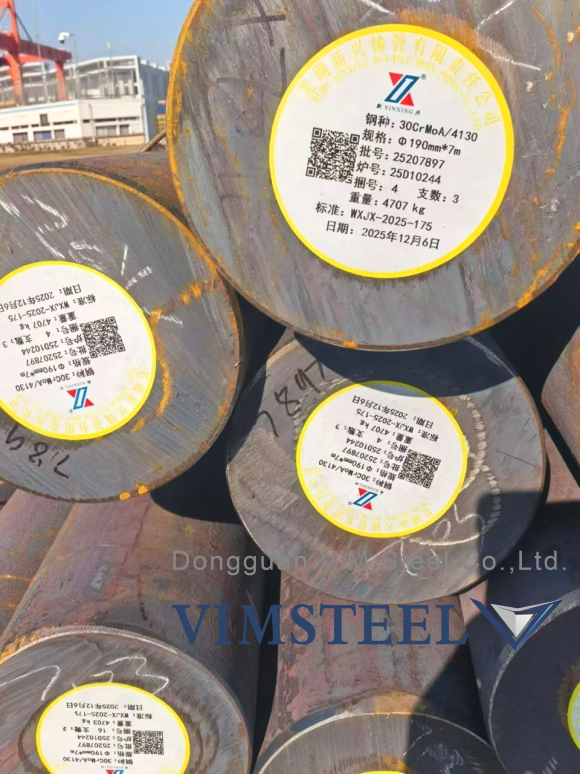
• 42CrMo4, 4340 and related engineering grades.
The availability of conventional, ESR, PESR or VAR material depends on the grade, producer, dimensions, quantity and governing specification. The required route should be confirmed before quotation rather than assumed from the grade name.
For a technical quotation, provide:
• grade and standard;
• product form and dimensions;
• quantity;
• delivery and heat-treatment condition;
• conventional, ESR, PESR or VAR requirement;
• hardness and mechanical properties;
• ultrasonic or cleanliness requirements;
• mill certificate requirements;
• third-party inspection scope;
• destination and packing details.
Where required by the agreed standard and contract, third-party inspection and traceable documentation can be arranged.
Frequently Asked Questions
Is every 1.4542 / 17-4PH round bar PESR?
No. 17-4PH can be supplied through several melting and remelting routes. The actual route must be confirmed through the producer and traceable mill documentation.
Is 1.2344 normally PESR?
Premium 1.2344 / H13 is commonly available as ESR-remelted material. It should not be described as PESR unless the producer’s route and certificate specifically confirm pressure electroslag remelting.
Is PESR useful for plastic mould steel?
It can be highly relevant to selected high-nitrogen, corrosion-resistant mould steels where cleanliness, homogeneity, polishability, toughness and corrosion behaviour are important. It is not required for every mould steel.
Is PESR always better than ESR?
No. PESR is more appropriate when pressure and atmosphere control solve a specific alloy or performance requirement. For many tool-steel applications, qualified ESR material may already meet the engineering need.
Can PESR compensate for incorrect heat treatment?
No. The melting route and heat treatment control different stages of material performance. PESR cannot correct unsuitable hardening, tempering, ageing or stress-relief practice.
How can a buyer verify PESR steel?
Request traceable documentation identifying the heat number, grade, product form and melting or remelting route. Add the required ultrasonic, cleanliness, mechanical and third-party inspection criteria to the purchase order.
Contact us: info@dgvimsteel.com
Whatsapp: +86 13423121371


Comments