
Stainless Steel Hardness vs Corrosion Resistance: A 30–60 HRC Grade Selection Guide

Harder stainless steel is not automatically more corrosion resistant. Hardness depends largely on microstructure, carbon content, and heat treatment. Corrosion resistance depends on alloy design and the service environment, including chlorides, temperature, PH, crevices, surface condition, and stress. Super duplex 2507 is not the hardest grade, but it is often the stronger choice for severe chloride service. 440C can reach high hardness but has a narrower corrosion window. 17-4PH / 1.4542 provides a middle route: adjustable hardness, high strength, and practical corrosion resistance.
A buyer may ask for “stainless steel that will not rust, with 50 HRC hardness.” That sounds specific, but an experienced supplier still needs more information.
Does the part contact ordinary water, cooling water, salt spray, or seawater? Does it carry impact, static load, or fatigue? Will it be welded or polished? Who performs final heat treatment?
Hardness is one selection coordinate. It cannot identify the correct grade by itself.
Why Hardness and Corrosion Resistance Do Not Rise Together?
Corrosion resistance starts at the surface
Stainless steel relies on a chromium-rich passive film. Chromium, molybdenum, and nitrogen can improve resistance in specific environments, but field performance also depends on temperature, chloride concentration, pH, deposits, crevices, stress, and surface condition.
Hardness can come from several metallurgical routes:
• Martensitic grades gain hardness through hardening and tempering.
• Precipitation-hardening grades gain strength through solution treatment and aging.
• Austenitic grades can gain strength through cold working.
• Duplex grades use a mixed austenite-ferrite structure to achieve higher yield strength.
This is why the phrase “the stronger or harder the steel, the less corrosion resistant it must be” is too simple.
High-carbon martensitic grades can lose some corrosion margin when chromium is tied up in carbides. Precipitation-hardening and duplex grades use different strengthening mechanisms, so they do not follow the same curve.
A good specification evaluates three properties separately:
1. Hardness and wear resistance
2. Corrosion resistance in the real medium
3. Toughness under the expected loading
A 30–60 HRC Stainless Steel Selection Map
The following ranges are discussion points, not direct substitution rules. Final hardness depends on the standard, product form, section size, heat treatment, and certified test result.

Worldstainless technical guidance gives 2507 a typical PREN of about 41, above the typical levels shown for 304L, 316L, and 2205. PREN is useful for initial comparison but cannot predict service life without the actual temperature, PH, surface, weld condition, and process medium.
Swiss Steel data places 1.4125 / 440C and 1.4108 in a high-hardness martensitic range. Final results still depend on austenitizing, cooling, tempering, section size, and material quality.
A practical first choice
• Chlorides plus structural strength: begin with duplex or super duplex.
• High strength with adjustable hardness: evaluate precipitation-hardening steel.
• Maximum hardness and wear resistance: begin with martensitic grades.
• Deep drawing, welding, and broad general corrosion resistance: begin with austenitic grades.
Comparing 2507, 17-4PH, 440C, and 1.4108
2507: corrosion-led selection
2507 / S32750 / 1.4410 is a super duplex stainless steel. It combines austenite and ferrite, offering high strength and strong resistance to pitting, crevice corrosion, and chloride stress-corrosion cracking in many demanding services.
Choose it when corrosion risk and pressure or structural strength are more important than very high surface hardness.
Typical fields include:
• Seawater and desalination equipment
• Offshore and oil and gas components
• Chloride-bearing chemical systems
• Pressure equipment
• High-strength piping
Its limitations are mainly in fabrication control. Welding heat input, solution treatment, phase balance, and undesirable phase formation must be managed.
17-4PH / 1.4542: the middle route
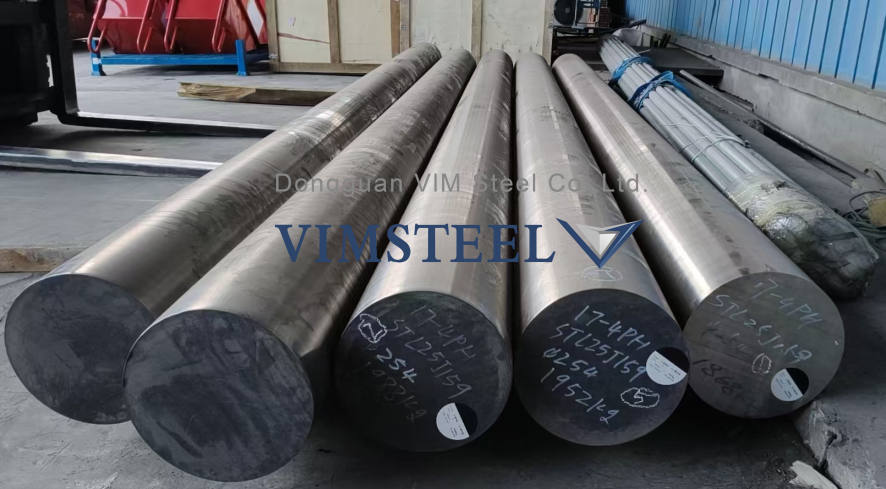
17-4PH is a martensitic precipitation-hardening stainless steel. Common designations include 17-4PH, Type 630, UNS S17400, EN 1.4542, and SUS630.
It gains strength from fine copper-rich precipitates formed during aging. Carpenter’s Custom 630 data lists 3%–5% copper, 0.15%–0.45% niobium plus tantalum, and carbon not above 0.07%.
Its value lies in the ability to select an aging condition for a required balance of hardness, strength, ductility, and toughness. It is widely considered for shafts, fasteners, pumps, valves, aerospace parts, and precision components.
It should not be described as “high-strength 304.” In many mild environments, its practical corrosion resistance can approach common austenitic stainless steel, but seawater, warm chlorides, crevices, and stress require separate assessment.
440C / 1.4125: hardness-led selection
440C is a high-carbon martensitic stainless steel used for bearings, cutting components, valve parts, and precision wear items.
It can reach substantially higher hardness than 17-4PH. That benefit comes with tighter control of:
• Heat treatment
• Carbide distribution
• Section size
• Grinding heat
• Edge support
• Impact loading
• Corrosion environment
A correct chemical certificate does not guarantee good service performance if hardening, tempering, or grinding is poorly controlled.
1.4108: a specialized high-hardness option
1.4108 / X30CrMoN15-1 is a nitrogen-alloyed martensitic stainless steel that can enter a high-strength, high-hardness range. It may suit selected bearings, wear components, and precision mechanical parts.
It is not an automatic upgrade from 440C, 17-4PH, or 2507. Availability, product form, standard, heat-treatment data, corrosion medium, and inspection requirements must be reviewed.
Grade Selection by Application
Stockholders
Do not organize stock by hardness alone. The warehouse record should include:
• Grade and governing standard
• Product form and dimensions
• Annealed, solution-treated, or aged condition
• Heat number and original mill certificate
• Surface condition
• UT, PMI, or third-party inspection status
Magnetic response may help rough sorting, but it cannot distinguish 2507, 440C, 1.4108, or 17-4PH reliably.
Aluminum extrusion plants
Use the correct hot-work tool steel family, such as H13 / 1.2344, for extrusion dies exposed to high temperature and thermal cycling.
Evaluate stainless grades for shafts, valve components, connectors, fixtures, hydraulic parts, and corrosion-exposed auxiliary tooling. 17-4PH may be relevant to high-strength shafts or fixtures, but it is not a general replacement for H13.
Mold factories
Ask which property controls service:
• Choose 420 or 440C / 1.4125 when hardenability, wear resistance, or polishing performance leads.
• Evaluate 17-4PH when structural strength, practical corrosion resistance, and limited aging distortion matter.
• Reconsider duplex or another corrosion class when high-chloride cooling water is the primary risk.
• Use hot-work tool steel for true hot dies and punches.
Stainless steel distributors
Avoid quotations that state only “17-4PH bar” or “440C plate.” Include the standard, delivery condition, mechanical or hardness requirement, dimensions, inspection, certificate, and traceability.
ESR, PESR, and VAR are production routes, not grade names. If a remelting route is mandatory, it must be written into the order and confirmed by traceable mill documents.
A Seven-Step Selection Process
1. Define the medium: water, salt spray, seawater, acid, alkali, cooling fluid, or dry atmosphere.
2. Define the temperature: normal, cleaning, start-up, upset, and maximum values.
3. Identify the failure risk: corrosion, wear, fatigue, deformation, or impact.
4. Confirm whether HRC is a design requirement or only a wear-life target.
5. Choose the stainless steel family before choosing the exact grade.
6. Specify grade and condition together.
7. Add certificates, testing, and traceability to the purchase order.
Frequently Asked Questions
Is harder stainless steel always more corrosion resistant?
No. 440C can reach high hardness, but it is not normally the first choice for severe chloride service. Hardness, corrosion resistance, and toughness must be assessed separately.
Is 2507 better than 17-4PH?
Not in every application. 2507 is normally selected for severe chloride resistance and high structural strength. 17-4PH is selected when adjustable hardness and very high mechanical strength are more important.
Should I choose 440C or 17-4PH?
Choose 440C / 1.4125 when high hardness, bearing performance, or cutting wear is central. Choose 17-4PH when structural strength, useful toughness, and practical corrosion resistance have priority.
Can a magnet identify these grades?
No. 2507, 440C, 1.4108, and 17-4PH can all be magnetic. Grade verification requires heat-number traceability and, where specified, PMI or laboratory analysis.
Contact us: info@dgvimsteel.com
Whatsapp: +86 13423121371


Comments