
Cr-Mo Low-Alloy Quenched and Tempered Steel: AISI 4130, 25CrMo4, 1.7218, and 30CrMo

If a shaft, gear, structural tube, or high-strength fastener must carry repeated loads without becoming unnecessarily heavy, engineers often look at Cr-Mo low-alloy steel before they look for the hardest steel available.
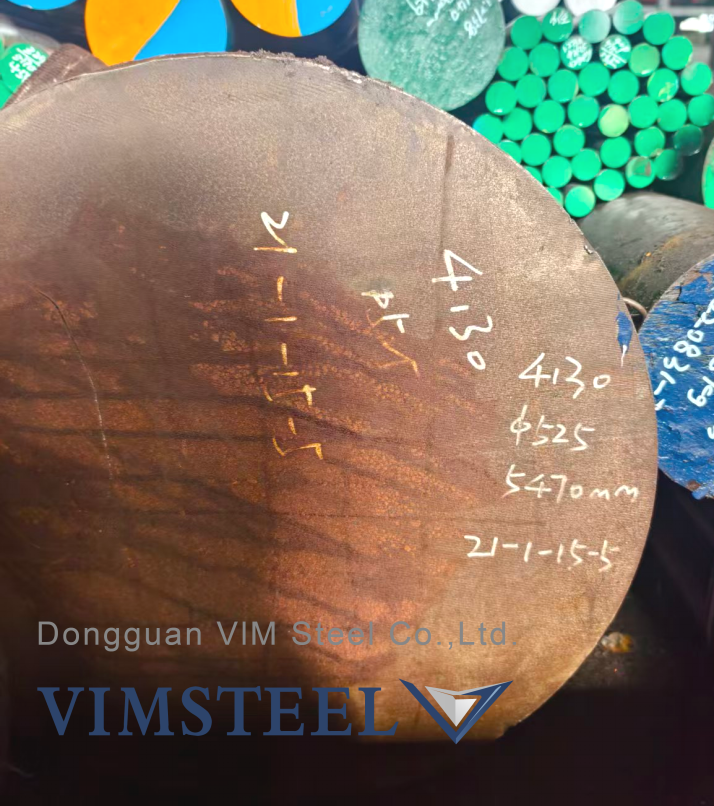
That choice is not accidental. Chromium-molybdenum steel is valued for balance: strength after heat treatment, useful toughness, fatigue resistance, practical machinability, and a cost that is usually easier to justify than a highly alloyed specialty grade. In international drawings, the same family may appear as AISI 4130, 25CrMo4, material number 1.7218, 708A25, SCM430, or 30CrMo.
The important point for buyers is simple:
The final performance of Cr-Mo steel depends on more than the grade name. Delivery condition, heat-treatment quality, cross-section, and the actual mill certificate all matter. Writing only “4130 equivalent” on a purchase order leaves too much open to interpretation.
What is Cr-Mo low-alloy steel?
Cr-Mo low-alloy steel is a medium-carbon alloy steel containing controlled additions of chromium and molybdenum. It is normally used after a heat-treatment route known as quenching and tempering, often written as +QT.
The material is first heated into the austenitizing range and then cooled quickly to form martensite. That as-quenched structure is hard but highly stressed and too brittle for most engineering service. A subsequent high-temperature temper reduces internal stress, adjusts hardness, and produces a tougher tempered-martensite or tempered-sorbite structure.
Cr-Mo steel should also be kept separate from stainless steel. The chromium in 4130, 25CrMo4, or 30CrMo is mainly there to improve hardenability and strength retention. It does not create the chromium-rich passive system associated with grades such as 316L or 1.4542 / 17-4PH. A Cr-Mo grade may perform well in ordinary atmospheric service, but it should not be sold as a stainless or marine-corrosion grade without a project-specific evaluation.
Why carbon, chromium, and molybdenum are all needed
The chemistry of this steel family is easier to understand when each major element is given a job.
Carbon: the strength control
A carbon level around 0.30% provides enough hardenability to form a strong martensitic structure after quenching, while remaining more weldable than a higher-carbon alloy such as 4140. Carbon is therefore the main lever between strength, hardness, ductility, and welding risk.
This does not mean that 4130 is automatically easy to weld in every condition. Wall thickness, restraint, hydrogen control, preheat, and delivery condition still govern the procedure. It means that its carbon balance makes welded structures more practical than many higher-carbon alternatives.
Chromium: hardenability and stability
Chromium delays the transformation of austenite into softer ferrite and pearlite during cooling. As a result, a larger section has a better chance of developing a useful hardened structure instead of remaining soft in the center.
Chromium also contributes to strength retention during tempering. It is not being added to make the steel “stainless”; it is being used to make the heat treatment more effective through the section.
Molybdenum: temper resistance and toughness support
Molybdenum helps resist temper softening and reduces the risk of certain forms of temper embrittlement. This is especially valuable when a component must be tempered at a relatively high temperature to recover toughness without losing too much strength.
A practical summary is:
• Carbon controls how hard the steel can become.
• Chromium helps the hardening reach deeper into the section.
• Molybdenum helps the tempered structure remain stable and less brittle.
AISI 4130, 25CrMo4, 1.7218, SCM430, and 30CrMo
The following grades are often compared during international sourcing:

These grades have overlapping chemistry and are often considered close substitutes for general mechanical work. They are not automatically identical in every procurement situation. Carbon and manganese windows can differ; phosphorus and sulfur limits can differ; heat-treatment requirements can differ; and the mechanical-property tables may apply to different product forms or size ranges.
For that reason, a buyer should distinguish three statements:
1. “The chemistry looks similar.”
2. “The grade is accepted as an approved equivalent.”
3. “The delivered product meets the specified mechanical and inspection requirements.”
Only the third statement is enough for final acceptance.
A sensible equivalent-grade note
A drawing or inquiry can state the preferred grade and the comparison grade without turning them into an unconditional substitution:
AISI 4130 preferred; 25CrMo4 / 1.7218 or 30CrMo may be considered subject to chemistry, delivery condition, mechanical-property verification, and buyer approval.
That wording is safer than simply writing “4130 equivalent,” particularly for aerospace, pressure, sour-service, nuclear, or safety-critical components.
Reading a chemistry table without overpromising
A chemistry table is useful for screening suppliers, but it is not the same as a performance guarantee. When comparing two mill certificates, look at the full range rather than one attractive number.
For a 4130-type Cr-Mo grade, a typical chemistry discussion may include approximately 0.22–0.34% carbon, 0.40–0.90% manganese depending on the standard, roughly 0.8–1.2% chromium, and about 0.15–0.30% molybdenum. Phosphorus and sulfur limits are important because they affect cleanliness, toughness, and welding or fatigue reliability.
The exact window must come from the governing standard named on the purchase order. A certificate that says “4130” but does not identify the standard, product form, heat number, or test basis is difficult to audit. The same issue appears when a supplier copies a generic chemistry range into a quotation but does not commit to a particular delivery condition.
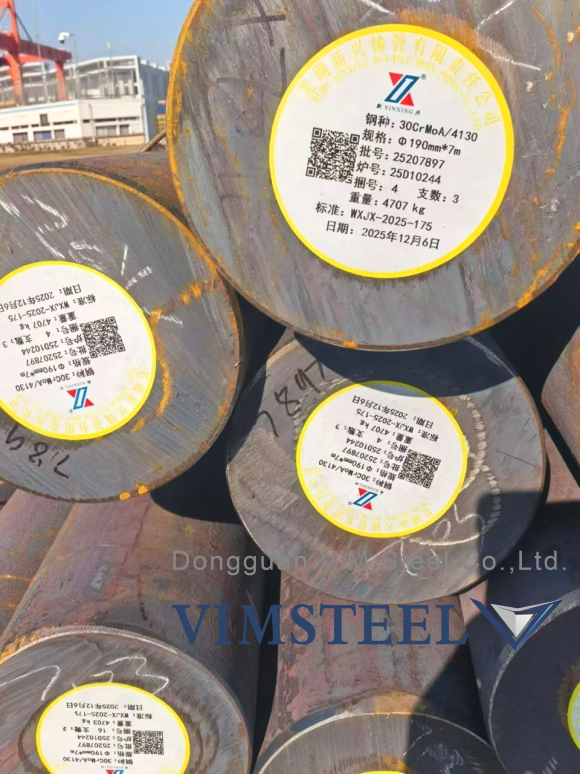
For stockholders and distributors, traceability is especially important. If a bar is cut into several pieces, the heat number should remain linked to each piece. If material is peeled, turned, or reprocessed, the customer should know whether the certificate still covers the delivered condition or whether an additional inspection record is needed.
The delivery condition is part of the material identity
A grade designation answers the question “what chemistry is intended?” It does not fully answer “what condition will arrive at the workshop?”
Common condition symbols include:
+A: annealed
Annealing lowers hardness, improves machinability, and helps relieve residual stress. Annealed Cr-Mo round bar is often selected when the customer plans substantial turning, milling, drilling, or forming before a final heat treatment.
Annealed material is not automatically suitable for a finished load-bearing part. It is a processing condition, not a guarantee of the final strength required in service.
+N: normalized or normalized rolled
Normalizing refines and homogenizes the structure and normally gives higher strength than a soft annealed condition. It can be useful for structural parts that need a stable, reasonably strong condition but do not require the full strength of a quenched-and-tempered product.
+QT: quenched and tempered
+QT means the material has been quenched and then tempered. The tempering step is not optional decoration; it is what converts a hard, stressed as-quenched structure into a more useful engineering structure.
If a buyer orders “25CrMo4” without stating +A, +N, or +QT, the supplier may reasonably ask for clarification. If the drawing requires a tensile-strength range, hardness, or impact value, those requirements should be written next to the condition.
What buyers should confirm before comparing price
A low price comparison is meaningful only when the technical scope is the same. Before comparing two offers for Cr-Mo round bar or forgings, confirm:
• grade and governing standard;
• product form;
• diameter or section size;
• nominal length and cutting allowance;
• delivery condition;
• surface condition, such as hot-rolled, peeled, turned, or ground;
• mechanical-property requirements;
• hardness range and test location;
• heat-treatment record;
• EN 10204 3.1 or project-specific certificate level;
• ultrasonic or other non-destructive testing;
• heat number and traceability after cutting.
This list may look basic, but many delivery disputes begin with a missing condition symbol or an assumed equivalent grade.
Cr-Mo low-alloy steel is a family of medium-carbon, chromium-molybdenum grades designed to obtain a useful strength–toughness balance through heat treatment. AISI 4130, 25CrMo4, 1.7218, SCM430, 708A25, and 30CrMo are often compared, but their equivalence must be verified against the applicable standard and the actual product condition.
Contact us: info@dgvimsteel.com
Whatsapp: +86 13423121371


Comments